Key takeaways
- Tiny house communities solve the "where do I put it?" problem by offering legal, serviced sites for small homes.
- They come in several models — rented lots, owned lots, co-ops and shared rural land — each with different costs and rights.
- Most have rules about the home itself, such as certification, size, style and skirting. Check them before you build.
- Read the lease or covenants closely and ask the questions below before you move in.
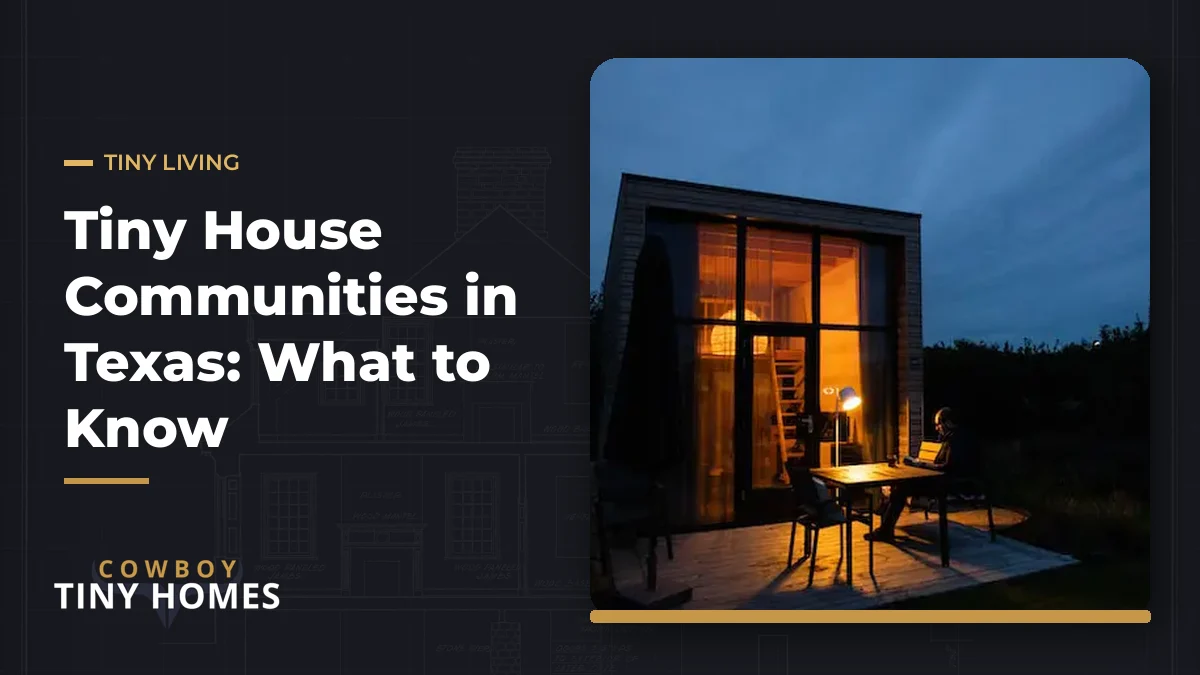
One of the first questions every tiny home buyer faces is where the home will actually go. Zoning in many Texas cities makes it hard to live full time in a tiny house on a regular residential lot, and buying rural land is not right for everyone. That is why tiny house communities in Texas have become a popular option. A tiny home community gives you a legal place to live, utility connections, and neighbors who share your interest in small-space living.
But "tiny house community" covers a lot of different arrangements. This guide explains how they work, what they usually include, what rules to expect, and the questions to ask before you commit.
What Is a Tiny House Community?
A tiny house community — sometimes called a tiny home village — is a property planned specifically for small homes. Some are converted or purpose-built RV parks with larger, nicer sites; others are planned neighborhoods where you can buy a lot; still others are cooperatives or groups sharing rural land. What they have in common is that the owner or developer has already worked out the zoning, utilities and site layout so individual homeowners do not have to.
Types of Tiny Home Communities
| Model | How it works | Best for |
|---|---|---|
| RV-park-style lot rental | You own the home and rent a site monthly or yearly. Often regulated like an RV park. | Tiny homes on wheels and park models; flexibility to move |
| Owned-lot planned community | You buy a lot and build or place a home that meets the community's standards. HOA dues usually apply. | Foundation tiny homes; people who want to build equity in land |
| Co-op or pocket neighborhood | Residents share ownership or management of the land and common spaces, with a stronger community focus. | People who want shared amenities and close neighbors |
| Ranch or rural shared land | A landowner leases sites on a larger rural property, sometimes with shared wells or septic. | Space, quiet and a country lifestyle |
The model matters because it determines what you actually own. In a lot-rental community you own the house but not the ground, so your long-term security depends on the lease. In an owned-lot community you hold real property, which can affect financing and resale. Our comparison of ADUs, park models and tiny homes on wheels explains how home type and land go together.
What Is Usually Included
Every community is different, but most provide some combination of:
- A defined site or lot with a pad or parking area
- Water, sewer or septic and electric hookups
- Trash service and road maintenance
- Common areas such as a clubhouse, green space or garden
- Laundry, storage or mail facilities
- Internet or shared Wi-Fi in some locations
Ask exactly which utilities are metered individually and which are shared or included in your rent or dues — this can make a big difference in monthly costs.
Typical Community Rules
Because communities want a consistent look and safe homes, many have requirements for the house itself. Common ones include:
- Home type and certification. Many communities that accept tiny homes on wheels require third-party certification, such as RVIA or NOAH, or a park model built to the ANSI A119.5 standard. Some owned-lot communities require foundation homes built to local building codes.
- Size and appearance. Minimum and maximum square footage, roof style, siding materials and color palettes may be specified.
- Skirting and setup. Homes on wheels often must be skirted, leveled and tied down, with wheels and hitches hidden.
- Porches, decks and sheds. Size and placement may be limited or require approval.
- Pets, parking and guests. Expect limits on number and type of pets, vehicles and long-term guests.
- Rentals. Some communities prohibit short-term rentals; others allow or even manage them.
Build to the rules first. The most painful mistake is building or buying a tiny home and then discovering it does not meet the community's certification or size requirements. Get the community's written standards before your design is final.
How Costs Are Structured
Costs vary widely by location, amenities and ownership model, so get current numbers from each community. The main pieces are:
- Lot rent or lot purchase price — monthly rent in rental communities, or a purchase price plus closing costs in owned-lot communities.
- HOA or community dues — covering common areas, roads and management.
- Utilities — metered electric and water, or a flat fee.
- Hookup and setup fees — connecting utilities, delivering and leveling the home, skirting and steps.
- Deposits and application fees.
- Insurance and taxes — on the home, and on the lot if you own it.
To see what the home itself might cost, try our tiny home cost calculator, then add the community costs to compare against alternatives like buying land. If you will finance the home, the tiny home loan calculator estimates the monthly payment.
When you compare communities, line up the total monthly cost — rent or dues plus utilities, insurance and any loan payment — rather than the headline lot rent alone. A slightly higher rent that includes water, sewer, trash and internet can work out cheaper than a low rent with everything billed separately.
Pros and Cons
| Pros | Cons |
|---|---|
| Legal, ready-made place to live | Monthly rent or dues continue indefinitely |
| Utilities and infrastructure already in place | Rules on home style, pets, rentals and guests |
| Built-in community and shared amenities | Less privacy than private land |
| Lower upfront cost than buying land and developing it | Lease terms can change; you may not own the ground |
15 Questions to Ask Before You Move In
- Is the community properly zoned and permitted for full-time residential use?
- Do I rent the lot, own it, or hold a share in a co-op?
- How long is the lease, and how much can rent increase at renewal?
- What home types are allowed — on wheels, park model, foundation?
- What certification (RVIA, NOAH, ANSI A119.5, local building code) is required?
- Are there size, height, style, color or material requirements?
- What are the skirting, setup and tie-down requirements?
- Which utilities are included, and which are metered separately?
- Is sewer municipal or septic, and is water from a city system or a well?
- What are the HOA or community dues, and what do they cover?
- What are the rules on pets, vehicles, guests and home businesses?
- Can I rent out my home short-term or long-term?
- Is the property in a floodplain, and how does it drain in heavy rain?
- What happens if the property is sold or the owner closes the community?
- Can I talk to current residents about their experience?
Building a Home That Fits the Community
If you already have a community in mind, share its written standards with your builder at the start. Cowboy Tiny Homes designs tiny homes on wheels, park model homes and foundation tiny homes, and we plan the size, exterior and setup details around the rules you have to meet. Ask any builder directly whether they can provide the certification a community requires before you sign a contract.
Community living also changes how you design. With neighbors close by, window placement, porch orientation and outdoor storage matter more — and because community sites are often sunny and open, the strategies in our post on designing a tiny home for Texas heat are especially useful. If you are still deciding on a trailer, read gooseneck vs bumper pull tiny houses.
Ready to build a tiny home for your community lot? Contact Cowboy Tiny Homes for a free design consultation, and bring the community's rules — we will design around them.